What is an electrified home?
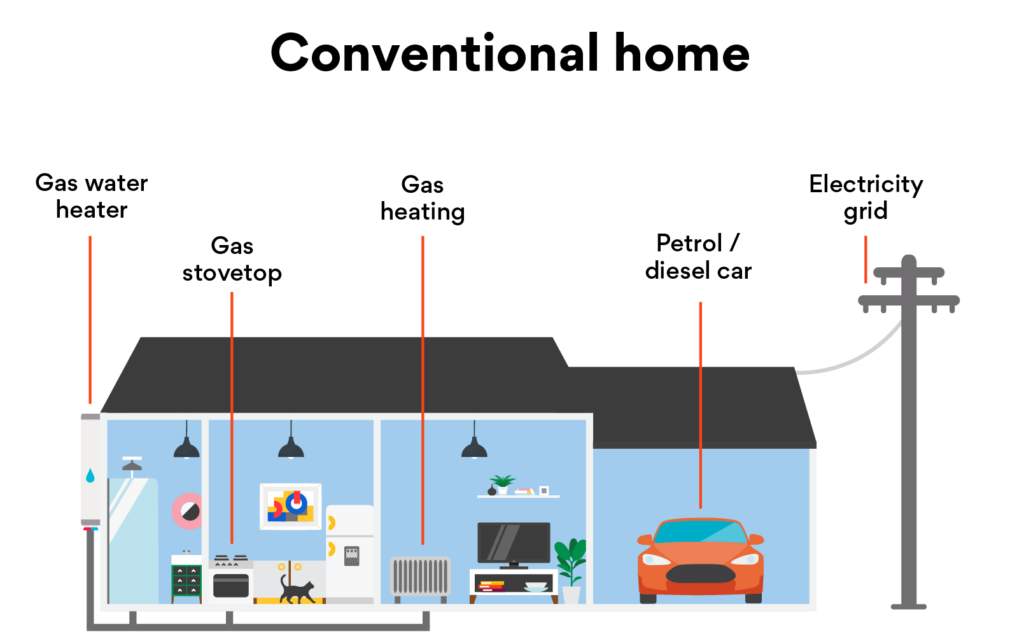
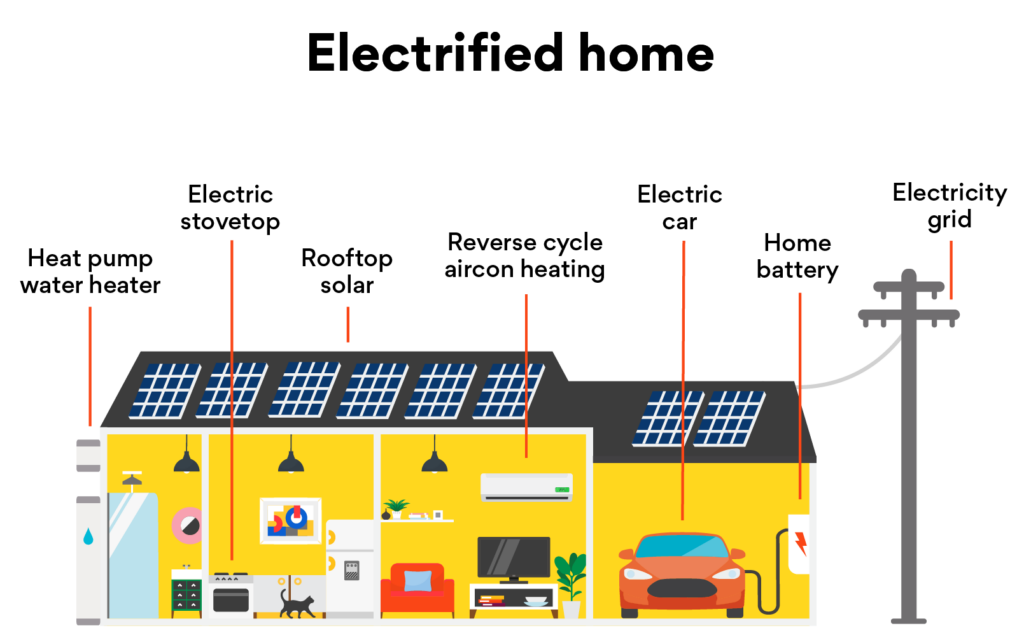
In its simplest form, an electrified home is one that has no reliance on natural gas – just electricity. With gas prices rising, making the switch to all-electric appliances could help you save on electricity bills, make the most of solar (whether you already have rooftop solar panels or are thinking about it), and can reduce your home’s carbon footprint if you’re able to take advantage of electricity sourced from renewables. So, if your home’s stove, hot water system or heating runs on natural gas, it may be worth considering electric when your appliances reach the end of their life.
When is an ideal time to consider electrification?
Building or renovating is a prime time to consider all-electric systems and appliances. While energy-efficient electrical appliances may cost more upfront, over their lifetime they’ll have lower running costs than their natural gas or less energy-efficient counterparts. And if your new home has rooftop solar, the savings could be even greater, as the real benefit of solar comes from using the energy you’re generating first, rather than feeding it back into the grid.
Do I need solar to electrify my home?
Whilst rooftop solar is a great way to help increase the green credentials of your home, and help bring your energy bills down, it’s not a requirement when making the switch to electrification. Opting to use electricity as much as possible allows you to take advantage of energy-efficient appliances – helping to reduce your household emissions and running costs.
How much will it cost to electrify my home?
Costs will vary depending on which natural gas appliances you currently have, as well as your style and personal goals. For example, let’s take a look in the kitchen. Many brands now offer induction cook-tops in a range of sizes, designs and price-points. The technology is fast, simple to control, safe – and easier to clean than gas cook-tops (a huge plus).
It’s important to remember that electrifying your home is an investment that will continue to provide benefits over the long term.
What if I rent?
If you’re a renter and your property has gas appliances, unfortunately the only option is to find electric alternatives. It may be worth considering a portable plug-in induction cook top for your kitchen and making the switch to an energy-efficient electric heater.
If you have a good relationship with your property manager and landlord, it may be worth floating the idea of electrifying the property. Energy efficiency upgrades may be subsidised (as well as tax deductible) and upgrades to the property can also help increase property value long term.
What are the perks of electrification if I have an EV?
If you own an EV, or are in the market for one, electrifying your home should be on your radar. Whilst you may no longer have to pay for fuel, charging your EV still comes at a cost. If your home has rooftop solar charging your car during the day, whilst you’re generating power, is a great way to offset the electricity costs. If you prefer to charge at night, adding a battery to your setup is a great option, as it allows you to utilise the power you’ve generated as opposed to it being fed back into the grid.
Solar technology has come a long way since the early days, with some states even offering rebates as an incentive.
How much could I save by going all-electric?
Sustainability Victoria estimates that, for a home with solar panels, making the switch to electricity could save you around $1,250 on your energy bills per year. This is in addition to approximately $950 of savings per year from an existing 6.6kW solar system. You can take your savings even further, by adding a medium-sized battery system, you could save an additional $520 per year.
If you don’t have solar, there are still savings to be had by upgrading to energy-efficient appliances. In fact, two of the biggest energy users are heating and cooling (41% of home energy usage) and hot water (21%). Upgrading appliances as they approach the end of their life, to energy-efficient electrical options, could result in savings on your energy bill – and allow you to take full advantage of your solar if/when you do invest in it.
Where to start
If you’re not in the process of building or renovating your home, the starting point is a little different. Upgrading major appliances, like hot water systems and heating, can be costly, so for many households the best time to consider electrification is when these appliances are reaching the end of their life. It’s a good idea to plan your electrification transition over a few years, allowing you to budget for the replacements and slowly transition off the natural gas network.
Our step-by-step guide to going all-electric
- Identify which appliances currently use natural gas in your home and which are reaching the end of their life first.
- Set a budget for the appliances in question and plan for when they’ll likely need replacing.
- Research the appliances you need and ensure they work for you, for example, if you’re an avid home-cook, make sure you find an induction cook top that ticks all your culinary boxes.
- Seek out quotes for both the product and installation so there are no surprises when it comes to budget.
- Research whether there are any rebates available in your state that can help reduce out-of-pocket costs.
- Prior to installation, check in with your installer and discuss whether you’ll need to reach out to your energy provider to have your electricity meter updated.
- Once you’ve moved all your appliances over to electric versions, reach out to your energy provider to disconnect your natural gas account.
- Plan ahead – what does the next phase look like for your home beyond just replacing your appliances? Are there opportunities to further save on your energy bills and increase your green credentials through additions like EVs, rooftop solar and batteries?
Electrification at home is one of the ways Aussies can increase their energy efficiency, bring their energy bills down, and can help reduce carbon emissions when powered by renewables.
There are also some simple, passive solutions to help make your energy at home work more efficiently like installing blinds, draught proofing, and planting trees to provide shade. Seasonal window shutters can also help to reduce or maximise sun exposure. And if you’re building or renovating, there’s bigger projects you can take on to improve energy efficiency — like upgrading insulation, installing double glazed windows, fitting insulated doors, creating zoned living spaces that can be sealed off to keep warmth or cool air in, and installing oversized eaves.
As Australia transitions to more renewable energy, and big change is happening across our energy network — there are plenty of ways to get involved now and make an impact at home today.
Thinking about solar?
We can help you on your way to energy independence with tools, information, access to solar quotes from our preferred partners, plus more. In less than 10 minutes, you can arrange up to 3 free solar and battery quotes from our preferred partners for your property. You can also check out recommended solar system sizes, potential bill savings, and more. It’s free and without obligation+
+ Origin has a commercial agreement with our partner installers and receives a commission from them for each referral.