What uses energy in the home?
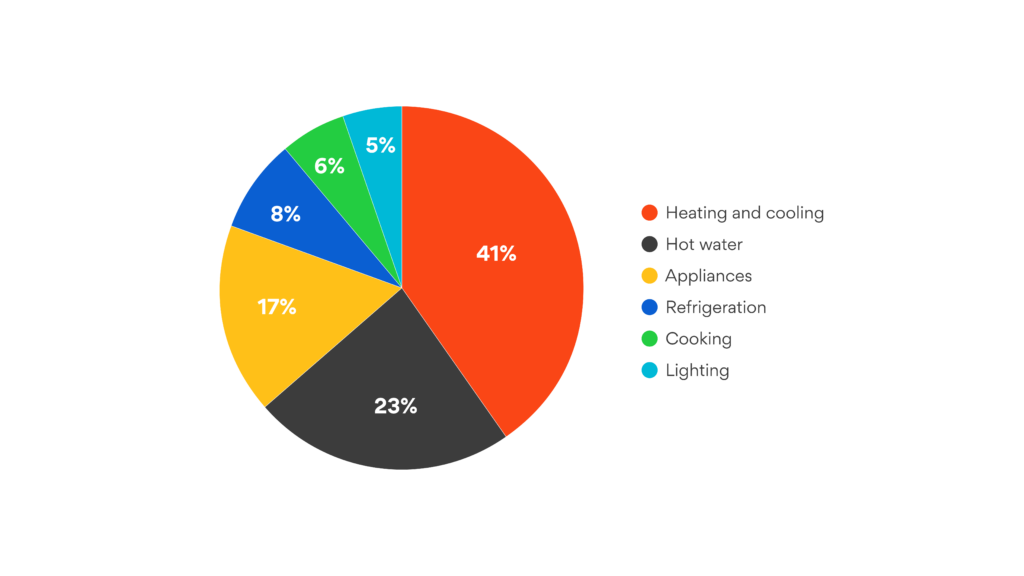
Before getting started with your home energy audit, it’s important to understand which parts of the home are the biggest energy users. You can start by focusing on these areas.
Let’s get started
Completing the audit is easy. Read through the questions and follow the steps below to get started.
If you answer yes? You’re all good, move onto the next question!
If you answer no? Read our tip to try to reduce your energy usage.
Heating and cooling (41%)
When heating and cooling, do you check the temperature?
In winter the best heating range is between 18°C – 20°C and in summer try to set your aircon to around 25°C. Every 1°C increase to heating and 1°C decrease to cooling can increase energy usage between 5% and 10%.
Does your home have insulation?
Installing insulation in your walls and ceiling could save up to 45% on your heating and cooling costs.
Have you sealed gaps around doors and windows that let draughts in?
Use draught excluders, door and window seals to prevent draughts and regulate temperature inside your home.
Important: When using a gas appliance, you have to ensure adequate ventilation to avoid creating a serious health hazard.
Appliances (17%)
Do you run your dishwasher and washing machine only when full?
Washing a full load means less washes in the long run, reducing the amount of energy and water being used.
Do you hang clothes out to dry?
Harness the power of the sun and hang our washing out instead of using the dryer. When you do have to use the dryer, avoid overloading it and make sure you clean the lint filter afterwards.
Do you turn appliances off at the switch?
Leaving unused appliances switched on at the power-point could be costing you up to $100 per year. So it’s worthwhile switching them off when not in use.
Hot Water (23%)
Do you shower for less than four minutes?
Taking shorter showers will save water and reduce the energy needed to heat it. You could save up to $200 a year on your water and energy bills by keeping your showers under four minutes. So pop on your favourite song, or set a timer, the next time you jump in the shower.
Is your shower flow rate 9L per minute or less?
Change your shower head to a 3-star rated one to save 10 litres of water per minute – and lower your energy costs.
Do you have a solar, electric heat pump, or a five-star energy rated gas water heater?
Choose an energy efficient water heater when your current water heater needs replacing. A solar hot water heater could supply up to 90% of your hot water needs.
Refrigeration (8%)
Is your fridge temperature between 3°C and 4°C?
Make sure your fridge temperature is between 3°C and 5°C and your freezer is between -15°C and -18°C. Each degree cooler uses 5% more energy, while higher temperatures allow bacteria to grow.
Lighting (5%)
Do you have energy efficient lights?
Fluorescent and LED lights are much more energy efficient than traditional incandescent or halogen lights. Think about replacing inefficient lights, especially when you have large groups of halogen downlights.
Cooking (6%)
Do you use lids on pans when cooking?
Keep a lid on your pots when using the stove – you use up to 70% less energy this way.
Bonus tips to help you save
Now you’re armed with tips to help improve your energy habits, it’s worth making sure you’re on the right energy plan for your needs to maximise savings.
You can also see how your usage stacks up against other households by using this benchmark tool from Energy Made Easy. If you’re energy usage is consistently higher than other households with the same amount of people in your area, this is an indication that you might need to make some tweaks to the way you’re using energy at home.