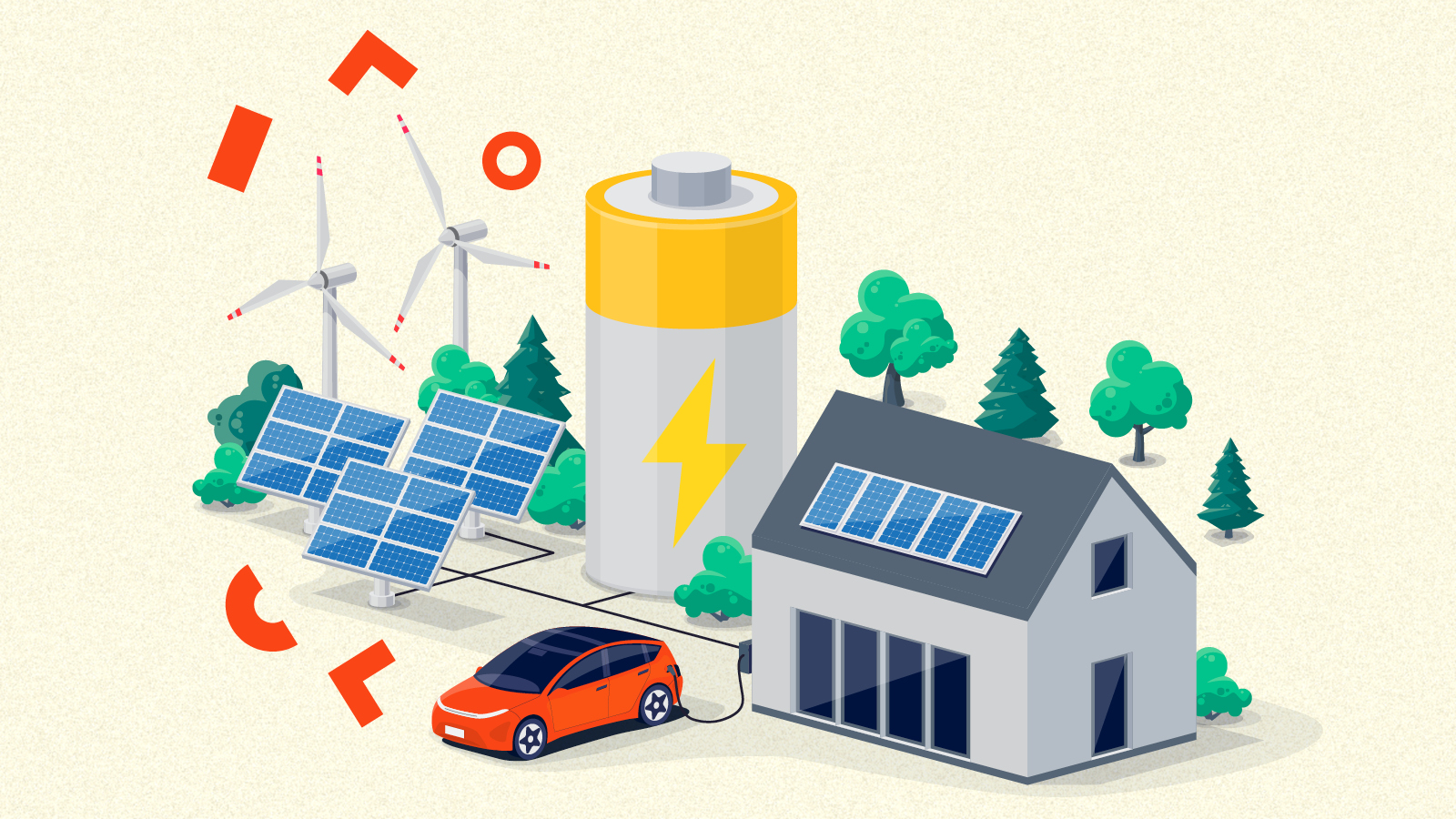
Change is happening across the energy network as Australia moves towards its ambition of net zero. But moving towards an energy grid run predominantly on renewables is a massive challenge. It requires big investment in renewables – like wind and solar. And it requires big investment in firming or back-up – like battery storage and pumped hydro, as well as transmission infrastructure. Gas will also continue to play a vital role for a while in maintaining a reliable energy system for Australians.
And this is what we’re exploring in So Watt? a podcast about energy hosted by Dom Fay and Zach Mander from Collective Noun. We’re looking at the transition to a cleaner energy system, powered predominantly by renewables. So, can we get to 100% renewables? Tune into episode six below or read on to find out.
First up, let’s talk about a major energy source – gas. It currently provides around 11 Gigawatts of power into the National Electricity Market (NEM). And that’s a lot.
And as we transition to renewables, gas remains important for the stability of the grid. In fact, the Australian Energy Market Operator says that in 2050, we’ll still need 10 Gigawatts of gas for firming up renewables.
That’s why gas power stations like Origin’s Quarantine Power Station in South Australia are so important. Quarantine is a peaking power plant and can generate almost 240 Megawatts of power.
What is ‘firming’ and ‘peaking’?
Peaking power plants turn on and off as the energy grid needs. They’re designed to deal with high demand (or peaks) in the grid and can help to fill gaps in the market from other variable sources, like when the wind stops blowing or the sun stops shining. So, as we transition to renewables, they’ll help to firm up (or stabilise) energy supply to keep the lights on.
And that’s why we need gas turbines that start quickly, like an aeroplane turbine. But they don’t need to take off like a plane… we certainly don’t need flying power plants. They start and shut down very fast to respond to fluctuations in the energy grid to maintain supply for customers. And this is key to how the grid of the future will work. That’s why over at Quarantine Power Station, Origin recently upgraded two turbines, which take 5 minutes to turn on and off, compared to older turbines which take around 25 minutes – a much faster response time.
So, how will the grid transition to renewables, if there’s variability in the energy output they provide? We need more battery storage and pumped hydro to store renewable energy to use later when it’s needed, and for a while longer, we’ll also need gas. These all play vital roles in providing stability in the grid when renewables can’t meet our energy needs.
What does it look like?
There’s actually a first-hand example right here in Australia of what a renewable-dominated grid could look like…
South Australia has invested heavily in solar, wind and batteries, with plans to hit 100% renewables by 2030. And in 2021, the state set a national record by running its grid on 100% renewable energy for almost a week. The question is, when can we do that for longer periods of time?
Moving to a renewable grid across the whole country won’t be easy. It’s all about maintaining energy system reliability. Essentially, an electricity grid works on the basis that supply and demand must always be kept in balance.
The other barrier to getting to 100% renewables is infrastructure. We need a lot more transmission to make sure we can get power from where it’s generated, to where it needs to be used – bringing solar and wind electricity from regional locations into cities and connecting Australian states.
So, given these challenges, can we actually run the energy grid predominantly on renewables? Yes, it’s possible! As a nation, one of the biggest things we need to do to get there is increase investment in all kinds of renewables and firming, like battery storage, and back that up with the transmission infrastructure and smart technology like AI to make it all work more efficiently and maintain energy reliability for Australians. And while we’re on that journey, gas-fired peaking plants will continue to provide back-up when needed, particularly over longer durations like days or even weeks – which is beyond the limits of battery storage technology and pumped hydro today, which usually discharge in a few hours.
We can all play a role in the transition to renewable energy. Australian homes, small and big businesses and government can all work together to reduce carbon emissions, support the right mix of energy sources for the future, and reach net zero by 2050.
Hosts, Zach and Dom from Collective Noun admit they know nothing about energy – but not for long! Origin’s So Watt? podcast questions everything you thought you knew about energy, and explores the solutions that exist today. In season two of So Watt?, go on a journey with Zach and Dom to find out more about the transition to renewables, what changes are already happening and what’s coming up.