AAs, AAAs, Lithium-ion… You’re probably familiar with these. And if you have an elaborate Christmas lights display planned, you might even already be stashing away batteries. Or maybe that’s just what one-half of our So Watt? podcast hosting duo is guilty of (nudge, nudge Dom Fay).
Anyway, what we’re getting at is hoarding AA batteries won’t cut it. As we increase renewables in the energy grid, we need to increase battery storage across Australia to capture excess renewable energy generated during the day so we can use it later when needed.
And this is what we’re exploring in So Watt? – a podcast about energy hosted by Dom Fay and Zach Mander from Collective Noun. We’re looking at the transition to a cleaner energy system, powered predominantly by renewables. So, where does big battery power come in? Tune into episode four below or read on to find out.
That’s a lot of water
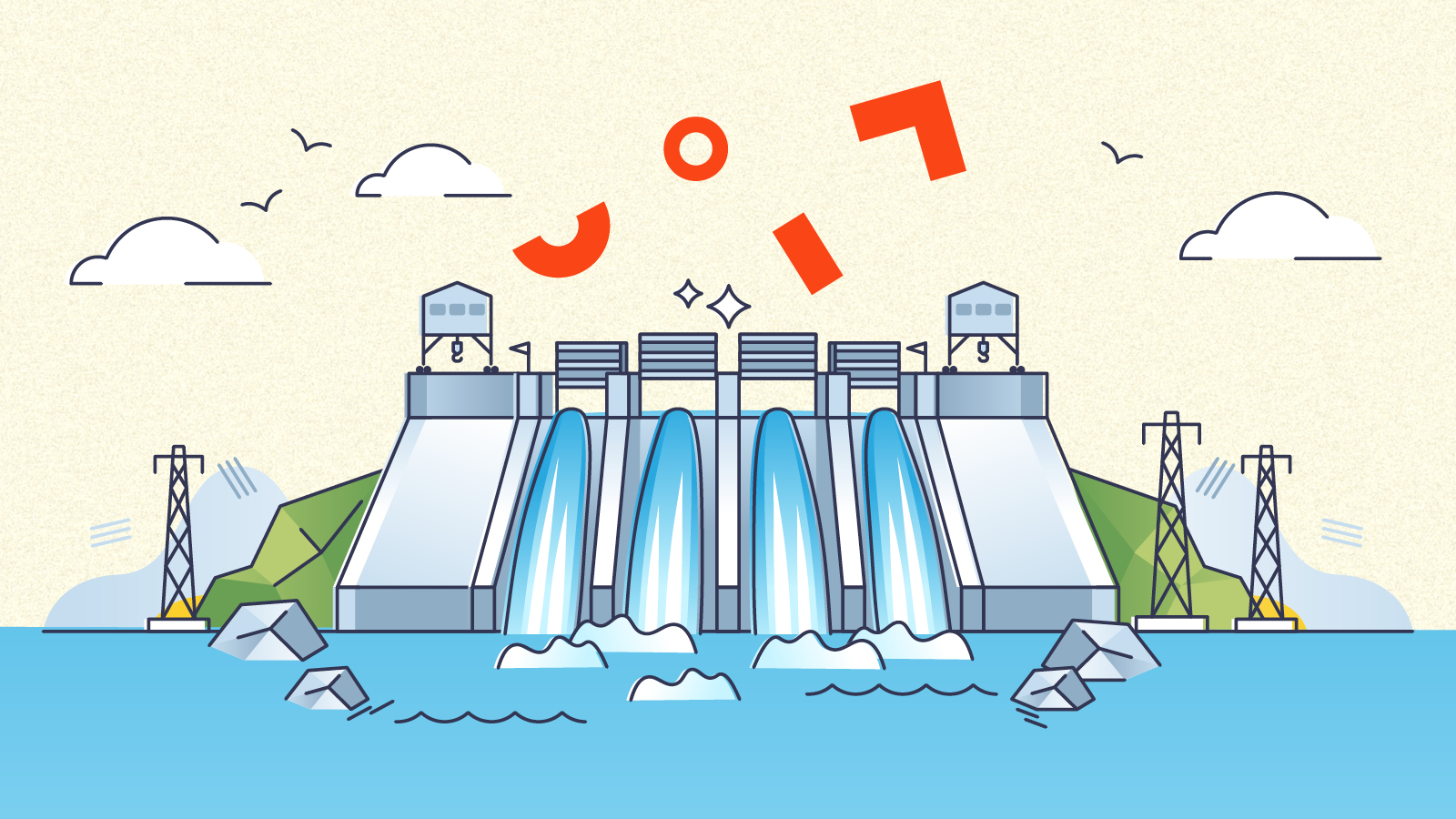
Batteries (of all sizes) are vital to the future of our energy grid, and so is some other mature technology: pumped hydro. Interestingly, hydro-pump isn’t just a great Pokémon move… hydro pumps use water to spin a turbine, which spins a generator to produce electricity. And over at our Shoalhaven Hydro Power Station in NSW, 50 million litres of water an hour is moved. To put that into perspective, a standard Olympic swimming pool is about 2.5 million litres – that’s an Olympic swimming pool worth of water every three minutes! And all this activity at maximum capacity can generate 240 megawatts.
The water reservoir at the top of a hydro plant basically acts like a giant battery, waiting to be released to generate energy. And that is why it remains vital for the energy grid of the future, despite being an older technology. And that’s why we’re looking at expanding Shoalhaven to double its capacity.
What about lithium-ion batteries?
While pumped hydro is an important part in the renewable energy transition, it’s not a complete solution to our storage and backup needs. Batteries (the lithium-ion kind) are also a key part of Australia’s future energy mix. In fact, batteries and pumped hydro are complementary. And while batteries are getting bigger, they run between one to four hours, pumped hydro can be used for longer-term storage, like days at a time.
Another important difference is that batteries last up to 20 years before they need to be recycled, but a pumped hydro system could last hundreds of years.
The speed to rollout batteries is one of the key reasons there are so many big battery projects being talked about globally. Plus, lithium batteries can be built almost anywhere, whereas hydro power facilities need to be built in mountainous areas and can take decades to build.
At home
All these big battery projects, and the rollout of EVs, will likely bring down the cost of batteries for everyone. In fact, most of us will eventually own batteries in some form, either home batteries or within an EV. There are even EVs hitting the market now that not only function as a car, but can also power your home, or feed power into the grid when it’s needed – known as Vehicle-To-Grid, or Vehicle-To-Home.
Lithium batteries are a great short-term solution to stabilising our energy grid, but in the long-term we’ll need bigger projects like pumped hydro to provide constant energy to help keep the lights on. They’re a perfect match, and we need both as we transition to renewables.
Hosts, Zach and Dom from Collective Noun admit they know nothing about energy – but not for long! Origin’s So Watt? podcast questions everything you thought you knew about energy, and explores the solutions that exist today. In season two of So Watt?, go on a journey with Zach and Dom to find out more about the transition to renewables, what changes are already happening and what’s coming up.