What kind of EV should you choose?
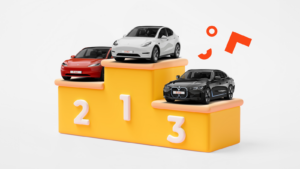
Like petrol cars, today’s EVs come in all styles and sizes. From compact cars to larger SUVs, each model comes with its own benefits.
- Compact EVs: Ideal for city driving and smaller budgets, the MG4, BYD Dolphin, GWM Ora and Mini Cooper SE are all great examples of compact cars that punch above their weight.
- Electric SUVs: Families often look for more space, greater efficiency
,and enhanced safety features. From the top-selling Tesla Model Y to the seven-seater Kia EV9, luxurious BMW iX3 and everything in between, there’s an SUV for all kinds of families. - Performance EVs: Electric cars are known for their quick acceleration and smooth drive. Some models, like the Kia EV6, focus on dynamic performance and handling, while others, such as the Tesla Model 3, offer greater range and efficiency.
How much range and battery life do you need?
Battery range describes how far your EV can travel on a single charge. Modern EVs have a variety of battery ranges, starting from around 300 km to over 600 km per single charge. Your specific needs and driving habits will determine the range that’s right for you.
Some things to think about include:
- Daily commute: Think about how much or how far you’re travelling. Most people drive less than 40 km a day for daily commuting and city driving – which all EVs comfortably cover.
- Long-distance travel: If you frequently take long journeys, look for an EV with a longer range or plan your routes with charging stations in mind.
- Impacts on driving range: It’s also worth noting that driving style and different conditions (like extra weight, weather, driving speed and terrain) can affect an EV’s range.
What charging options are available?
There are plenty of options available to charge an EV, each with different costs and charging speeds. It’s good to get an idea of the types of charging infrastructure available to you, including:
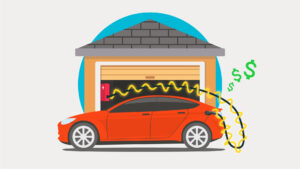
- Home charging: Most EV owners will charge at home overnight, like they do when charging their smartphone. Simply plug the mobile charging cable into a standard power outlet to charge your vehicle. For quicker and more convenient charging, you could consider installing a Level 2 EV charger.
- Smart charging: Home charging can be even more cost effective if you have solar installed. This is because you can charge during the day and take advantage of the energy that your panels are producing.
- Scheduled charging: You can also leverage smart charging capabilities, like EV Power Up, which works by finding low-cost energy to charge your EV at a super low 8c/kWh rate – which may include when there is excess solar during the day or when demand is low overnight – and avoids charging during peak demand times when energy is usually at its most expensive. Allowing you to fully charge your EV for as little as $5.
- Public charging: EV charging stations are becoming more prevalent in Australia, making it convenient to top up your EV on the go. Apps and websites like PlugShare can help you find nearby chargers and plan routes if you’re heading on a roadtrip.
We can also help install EV chargers at your home, in apartment buildings and your business*.
What are the costs and incentives for EVs?
The costs of EVs in Australia are becoming more competitive. More and more models are becoming available, at different price points. Although the initial purchase price could be higher than a traditional vehicle, you’ll also want to consider any cost incentives and long-term savings that may be available with an EV.
- Financial incentives: Various states and territories may offer rebates or grants for purchasing EVs or installing EV chargers. You could also consider packaging an electric vehicle through your employer to help save on taxes.
- Lower running costs: Electric cars are often cheaper to run and may include fuel savings of up to 70% and maintenance savings of around 40%. Driving an electric vehicle could save you thousands of dollars per year, compared to petrol or diesel cars.
- Free or discounted charging: Some local councils, shopping centres and charging providers (like JOLT Australia) offer free or subsidised charging for EV drivers.
How long do you plan to keep the car?
There are long-term and short-term options for getting your first EV, depending on your budget and needs. Purchasing an EV has its benefits, while subscriptions and leases are more flexible options.
- Long-term ownership: If you’re confident your vehicle needs won’t change and prefer to own the car outright, purchasing an EV could be the right option for you. Other options, including financing and novated leasing, may be suitable for long-term use of the vehicle.
- Short-term options: An EV subscription offers a great alternative, especially if you’re uncertain about your future needs. Our all-inclusive subscription plan allows you to return, upgrade or switch to a different vehicle if your situation changes. Plus, with Origin, if you fall in love with your EV, you have the option to purchase it after three years.
Make the switch to an EV with Origin
Getting your first EV can be an exciting and rewarding experience, especially as Australia moves towards more sustainable transportation. From EV subscriptions to smart charging solutions, we can help you get started on your EV journey.
Exploring these five key factors — vehicle type, range and battery life, charging options, costs and incentives, and ownership models — will help you make a decision that suits your needs.
Important information
Our EV subscription plans come with registration, comprehensive insurance, maintenance and servicing, 24/7 roadside assistance, and tyre replacement for fair wear and tear. Home EV charging, on-site charging or public charging costs, and electricity used for electric vehicle charging are not included.
For salary packaging subscription customers, at least 30 days’ notice is required for vehicle swaps or returns. Vehicle swaps will be contingent on vehicle availability. Depending on the return date of the existing vehicle, there may be credit or debit adjustments to your subscription payments to account for the new vehicles. For business subscriptions customers, vehicle swaps are only available on plans with a term greater than 36 months. Business customers are able to swap their vehicle annually, subject to stock and availability. Vehicle swaps may result in a variation and adjustment to the monthly cost and could affect purchasing options.
You can make an offer to purchase the vehicle outright after subscribing to the same vehicle for a minimum of 3 years (36 months). We’ll include an indicative price in your subscription quote or business subscription agreement. There’s no obligation for you or your business to purchase the vehicle at the end of the subscription term. Origin is under no obligation to accept the offer you choose to make and the decision to accept or not accept an offer (regardless of the price and terms offered) is ultimately at Origin’s sole discretion. If your offer is accepted, Origin will transfer ownership of the vehicle to you or your business.
*Origin’s capacity to install EV chargers at these sites may be limited depending on where these sites are located and other operational constraints. Origin makes no guarantee that it can assist with EV installations at these site.
For full T&C’s and important information about Origin 360 EV Subscription Salary packaging, please click here.