Who do I need to contact?
If you experience a blackout, it’s important to contact your local distributor. Your energy distributor is the company that owns and operates the poles, wires and grid that provide your home with energy. Your distributor’s determined by where you live so you don’t get to choose them – unlike your energy retailer (Origin).
Your local distributor can provide info about the cause of the outage and will likely be able to provide you with an estimated time when the power will be restored in your area.
How do I find my energy distributor?
Some postcodes have several distributors. If you see more than one listed you can confirm which one services your area by looking at your bill. Their number will be listed under ‘Faults and Emergencies’.
If you don’t have your bill handy, we’ve got you covered. Just pop your postcode into our Distributor Look-up Tool and we’ll tell you who your distributor is.
My power’s out, what do I do?
Your number one priority during a power outage is to stay safe.
Be energy safe
Be careful not to burn yourself when using candles and other open flames for light, and keep naked flames away from any flammable materials.
Food safety
Try to keep your cold and frozen food cold by moving it all to the freezer and only opening the freezer and fridge when necessary to keep it as cold as possible.
It’s generally recommended that food can be kept and eaten for up to 4 hours and then it must be thrown away or, if it’s raw meat, cooked and eaten. When your power’s restored, if your frozen food is still solid, the food should be safe to refreeze – but approach this on a case by case basis.
If you have any questions, contact the Department of Health and Human Services on 1300 364 352.
In the event of an extended power outage, you may be eligible for a credit to reimburse you for spoiled goods. Your local distributor will be able to advise whether you’re eligible for this.
Take care of one another
If you have neighbours or relatives that may have special needs (such as the elderly or those with a disability), be supportive. Check up on them to make sure they’re safe and provide assistance where you can.
If a neighbour or relative has life support, and their supply has been affected, help assist them to the nearest hospital if safe to do so. If it’s not safe, reach out to the ambulance service by calling triple zero (000).
What will happen to my solar system?
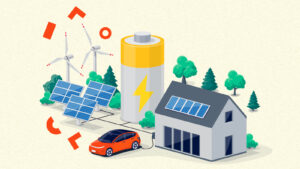
When you initially connect your solar system to the network, you need to abide by the network’s connection standard. This means the inverter must follow grid operation. So if the grid’s down the inverter needs to, and will, shut down automatically.
This is because linesmen may be harmed when repairing faulty electricity wires travelling back into the grid from your solar system. After the repairs have been made, your solar power system will automatically turn on during daylight hours. If you have a battery backup system connected to your solar system, then depending on the wiring, some internal services like your fridge could still be operated by the batteries.
I have an electric garage door, what should I do?
Many garage doors feature a manual release function to bypass the opening mechanism during power outages, so don’t fear. To activate this, depending on your door, there will be a short rope hanging down that usually ends with a red, T-shaped handle. Pull this cord to release the door from the drive chain or belt.
Pulling this cord will allow you to manually raise your garage door. When power comes back on, you may have to manually reset your garage door’s automatic opening system. If you have any issues, contact your garage door installer.
What if a natural disaster or emergency is occurring?
If a flood or bushfire has caused a power outage in your home, you need to act appropriately.
Floods or storms
If you’re impacted by flooding or a damaging storm, your best point of contact is your State Emergency Service (SES):
Bushfires
Electricity and natural gas supplies are often disconnected during bushfires for safety reasons. Contact your local distributor to get an update on whether a disconnection has occurred.
If you’re in a high-risk location for a bushfire, contact your state fire service:
- NSW Rural Fire Service
- VIC Emergency & Country Fire Authority
- QLD Fire Department
- SA Country Fire Service
- ACT ESA
- WA Emergency
- Secure NT
If you have any further questions, our emergencies page can give you tips about what to do in the case of bushfires and floods.
Preparing for a natural disaster or wild weather
If there is a severe weather event predicted in your area, here are a few useful tips and resources to help ensure your home is prepared. In any weather event, your local distributor is your best contact for outage info. You can find your distributor’s contact details on the first page of your bill, or by popping your postcode into our look up tool. Jot these down and keep them handy.
If you have life support at your property, ensure you are across your backup plan and have planned for access to your nearest hospital.
For storms or cyclones
- Secure the exterior of your home by bringing all outside patio furniture, potted plants, bikes and toys indoors.
- Source sandbags to keep water away from your property. Check whether your local council is offering these for free.
- If you have a generator, test it ahead of time and ensure you have adequate fuel on hand.
- Charge power banks and any other appliances you may need (such as iPads, eBook readers, laptops, etc for entertainment) ahead of the weather event.
- Other important items to ensure you have on hand include bottled drinking water, food to last you between 5-7 days, torches, batteries, a battery powered radio to keep up to date with weather warnings, first aid kit and medication.
For bushfires
A home that’s well prepared for bushfire season is more likely to survive a bushfire or ember attack according to the NSW Rural Fire Service.
Here are their maintenance tips to ensure your home is bushfire ready:
- Clean your gutters of leaves and twigs, and install metal gutter guards.
- Attach a fire sprinkler system to your gutters.
- Repair damaged or missing tiles on the roof, enclose any gaps under the house and repair any in external walls.
- Fit seals around doors and windows to eliminate gaps inside the home.
- Keep lawns short and gardens well maintained.
- Cut back trees and shrubs overhanging buildings.
- Clean up fallen leaves, twigs and debris around the property.
- Have hoses long enough to reach around your house.
- If you have a pool, tank or dam, put a Static Water Supply (SWS) sign on your property entrance, so firefighters know where they can get water.
- Ensure you have an emergency survival kit on hand. Including things like: portable battery-operated radio, waterproof torch, spare batteries, first aid kit (with manual), candles with waterproof matches, woollen blankets, bottled drinking water (at least 3L for each person per day), medication and appliance chargers.
Tips for keeping the kids entertained
With TVs, computers and gaming consoles off the table (unless they’re battery operated of course), we’ve pulled together some easy ways to keep the kids entertained whilst waiting for power to be restored.
- Have a storytelling and shadow puppet show. Use a flashlight to take turns creating different animals and characters on the walls and creating stories to go with them.
- Pull out the board or card games and take the opportunity to bring the whole family together for some quality time.
- Who says forts are just for kids? Use blankets, pillows and sheets to create a cosy hideout inside.
- Pull out your craft supplies markers, paints and scrapbooks or download our colouring in sheet and get crafty together.
Have any more questions?
If you want to learn more about power outages, how this might affect your home or how to be better prepared, we recommend visiting your local distributors website.