From accessing incentives and grants, to finding cost-efficiencies thanks to potentially cheaper running costs, our Origin 360 EV team share why now is a great time to consider electrifying your business’ fleet.
Governments at both state and federal level are currently incentivising the uptake of EVs with targeted rebates and subsidies – meaning it’s a great time to look at making the switch to electric. Incentives like the recent Fringe Benefits Tax exemption for electric vehicles (Electric Car Discount) alongside other relevant incentives are helping fuel demand, as the Total Cost of Ownership (TCO) for electric vehicles can be equal, if not lower, than a comparable internal combustion engine (ICE) vehicle.
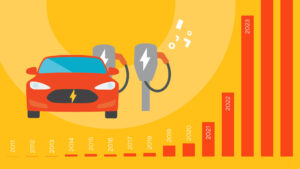
David Helmy, Head of Sales eMobility at Origin, says, “Given the rate of growth, taking the first steps now is important to understand key considerations such as driver engagement and charging requirements. Those insights mean you will be equipped to transition your wider fleet as new models continue to launch across segments.”
Origin 360 EV’s expertise across EV fleet management, charging, driver engagement and transition management can help to make switching to EVs simple and seamless for businesses. Helping businesses access these incentives and optimise cost efficiencies throughout their transition.
There are a range of EV models available
There’s a growing range of EVs on the market that are featuring in business fleets. With manufacturers like Hyundai, KIA, Nissan, Renault, MG, Polestar, Tesla and BYD just a few of the options available — EVs are no longer limited to luxury class vehicles. So now, you’re sure to find the right EV to suit your business needs.
“We’ve seen monumental improvements in EVs in recent years: from model availability to battery range and charging systems. This development means EVs are an area of focus for many fleets with a variety of options available to meet business needs.”
– David Helmy, Head of Sales eMobility, Origin.
EVs can help you save on running costs
A key consideration for businesses, especially when changing vehicles, is how the switch to electric vehicles helps their bottom line.
“High-utilisation fleets are already seeing competitive economics when switching to electric vehicles due to the lower running costs of EVs” says David. “With an average cost of $0.04/km in electricity, compared to $0.14/km in fuel costs, businesses can save up to 70% on fleet running costs.”
EVs are also disrupting the legacy automotive model more broadly through their lower service requirements. EVs have far fewer moving parts than ICE vehicles, and less consumables requiring regular replacement. Transport for NSW estimate maintenance savings of up to 40% for EVs compared to legacy combustion engines.
Optimise savings with smart charging
‘Smart chargers’ are EV chargers with internet connectivity, enabling a range of connected features via software that are valuable for businesses.
“We can drive the running costs of EVs even lower with smart chargers by scheduling charging to occur when energy costs are lower.” says David.
“We recognise the ideal charging strategy will differ from business to business, and that’s why we offer tailored solutions. We look at each site – whether at business premises or employee homes – to identify the most effective installation for that business and its fleet.
Origin 360 EV is dedicated to helping Australians make the switch to electric vehicles. We offer a range of products and services, from home charging solutions to business leasing, subscriptions and car sharing.
This article is part of the Origin Business EVs blog series. Origin Business EVs is a resource and content series providing expertise and practical advice to Australian businesses considering electric vehicles.