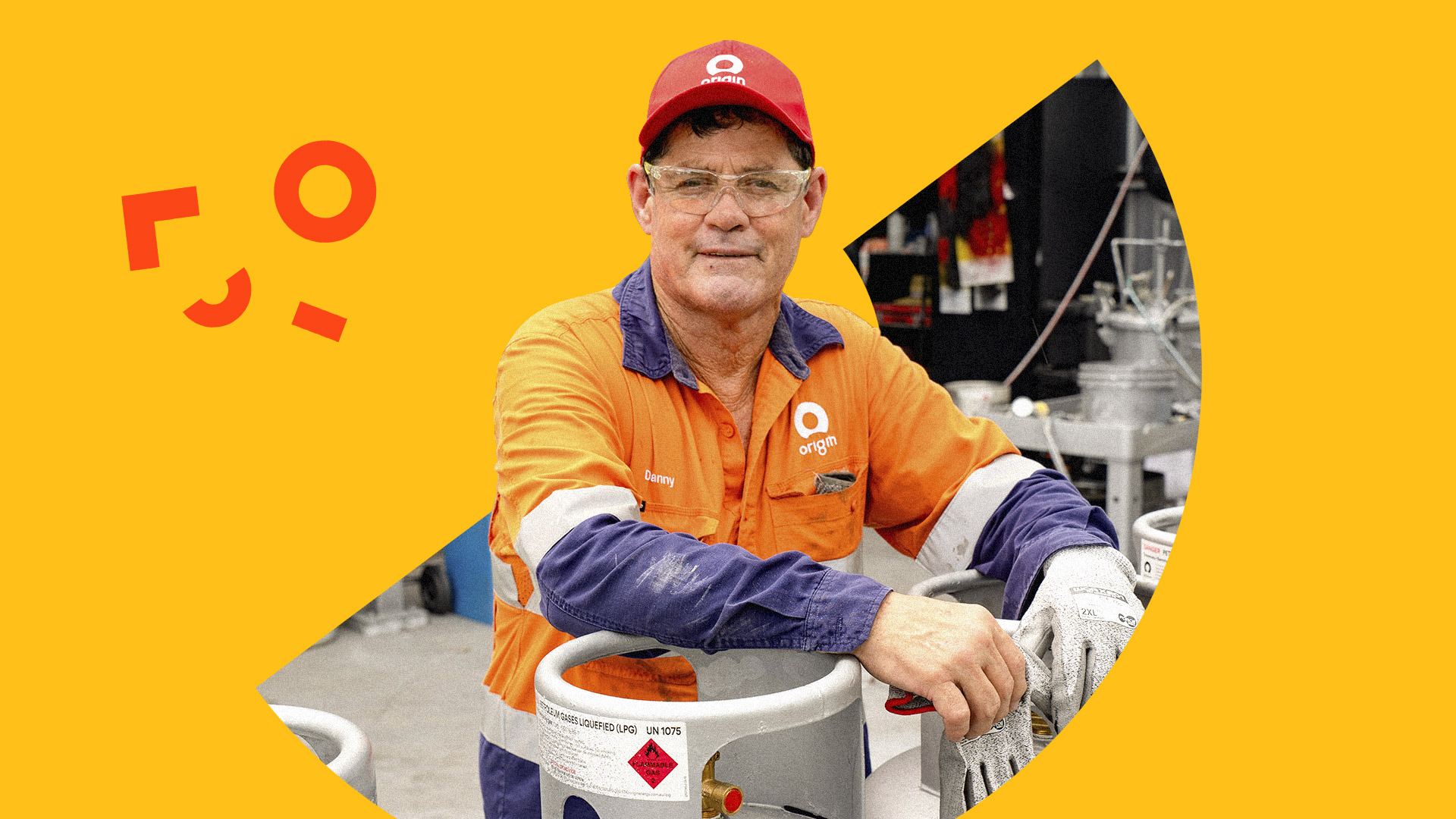
The year was 1986. Top Gun soared to the top of the box office, Bob Hawke was leading Australia through economic reform, and Mike Tyson became the youngest heavyweight champion in boxing history. Meanwhile, 25-year-old Danny Hoelscher kicked off his career as a Terminal Operator at the Bulwer Island LPG Terminal in Brisbane.
Over the next 39 years, the terminal has been his workplace, and he’s witnessed first-hand the evolution of the LPG industry – adapting to changing landscapes, working with various companies, and now passing on his knowledge to the next generation of operators.
Danny, 64, says, “Back in ’86, I was on the lookout for work when a friend mentioned that the Brisbane Gas Company, a key player in Brisbane’s gas distribution at the time, was hiring operators for its Bulwer Island LPG storage and distribution terminal in Pinkenba.
“The LPG terminal wasn’t as busy then as it is today. I was the only terminal operator. I’d come to work in shorts and a t-shirt, filling a couple of hundred bottles a day. Now, there are 14 operators at the terminal, filling thousands of bottles, so it’s grown enormously.
“The dress code has changed too. You’ll find me in hi-vis gear and sun-protective long sleeves and pants – we’re a lot more safety-conscious these days.
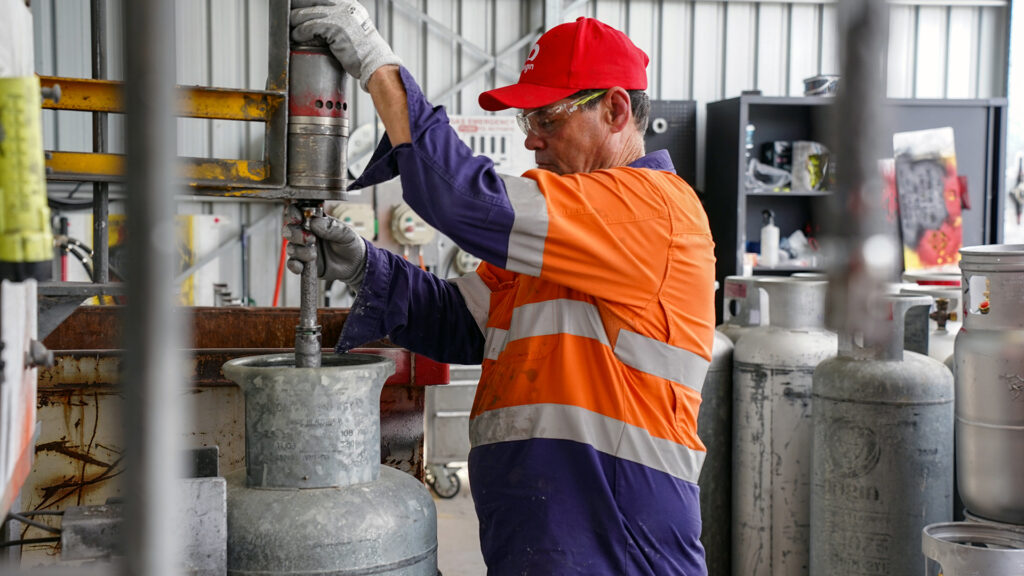
“The technology has come a long way. I remember hauling LPG cylinders around the terminal onto the filling scale to fill them, using a sliding weight scale to weigh each one. Now, we have LPG filling carousels, which are rotating platforms that automatically fill cylinders with gas and weigh them to make sure they’re filled correctly. It’s a huge improvement and makes the old ways feel so primitive in comparison.
“We used to have LPG rail cars deliver gas to the terminal from production facilities. We’d unload the gas and transfer it to storage tanks for further distribution, but the rail delivery system has since been phased out at Bulwer Island.
“When the BP Refinery was running, it supplied the terminal with around 200 tonnes of LPG a day, but after it shut down in 2015, we’ve had to rely more on imports.
“Now, gas is delivered by ship each week, and we unload about 2,300 tonnes of LPG for distribution to various sites.”
After starting with the Brisbane Gas Company in 1986, Danny has worked at the terminal through three ownership changes. Brisbane Gas Company was taken over by Boral in 1988, which later sold its energy division, ultimately leading to Origin Energy taking ownership in 2000.
“I look back on my time at the terminal with admiration – it’s been my life, and it’s been good to me. Through all the ownership changes, I’ve always worked with great bosses and colleagues. You come to work each day knowing what needs to be done, you’re out in the open, and I’ve always liked the hours – starting early at 4 am and clocking off by 2pm. So, it’s a combination of things that has kept me here for so long.”
Revered at the terminal as a guru of sorts, Danny has seen it all in his 39 years on the job. Now working part-time – three days a week, nine hours a day – he still handles everything from unloading ships and trucks to filling, testing, and transferring bottles. He also plays a key role in training the next generation of terminal operators.
“I’m nearing retirement now, and the long hours and physicality of the work are becoming more challenging as I get older. The younger guys at the terminal handle it better than I can, and they’re growing more confident and capable in taking on all the tasks, which is great to see.
“I love to travel, and I haven’t seen much of Australia yet, so I’m looking forward to taking it easy when I eventually retire.”
But Danny’s colleagues aren’t ready to see him go just yet. A pillar of the terminal, he carries decades of knowledge that can’t be easily replaced. More than just a mentor, he’s a trusted teammate whose expertise and steady presence have long been invaluable.
“Danny retire? Not a chance,” jokes fellow terminal operator Steven White. “He might think he’s retiring, but we’re not letting him go that easily.”