Director Jamie Sormann says the inspiration for Haines Street was to convert a small residential block into a family home that not only meets the needs of today but is also prepared for the future. “The expansion of cities like Melbourne often leads to urban sprawl. However, for those choosing inner-city living, densification is key,” Jamie explains.
“Inner-city blocks, while not always suitable for multiple dwellings, are perfect for tall family homes. Our Haines Street project exemplifies this, turning an older home into a modern, sustainable space.”
Foomann Architects’ approach to the Haines Street renovation is deeply rooted in sustainability while being careful not to favour form over function. Being a family home, Sormann says every design element needed to also enhance the comfort and livability of the building.
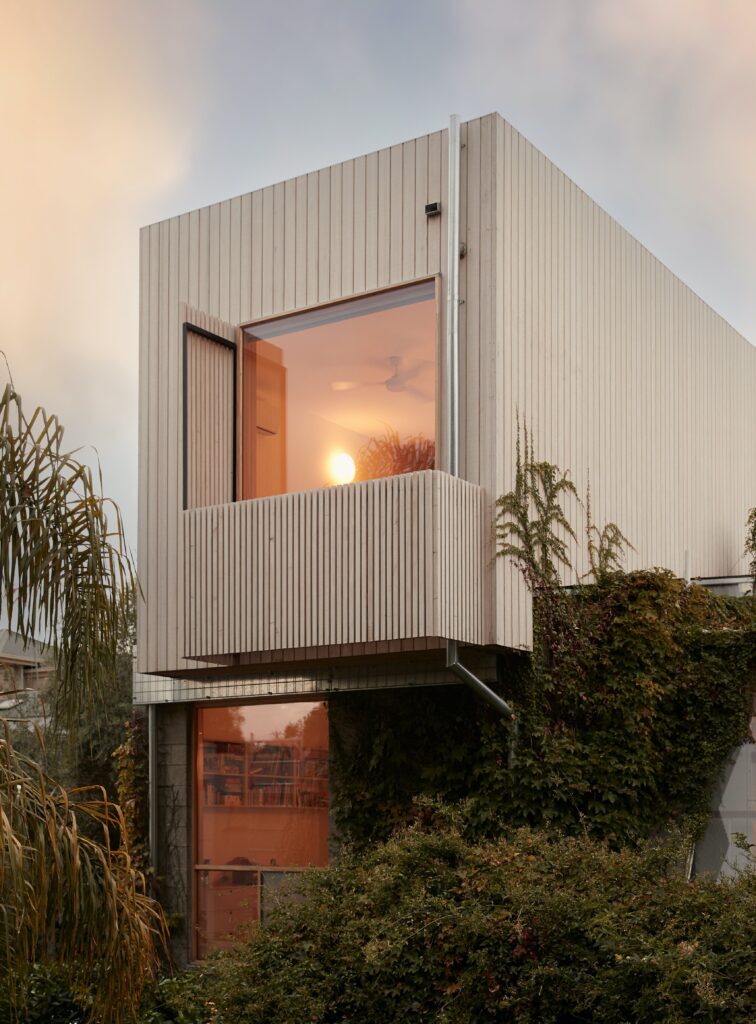
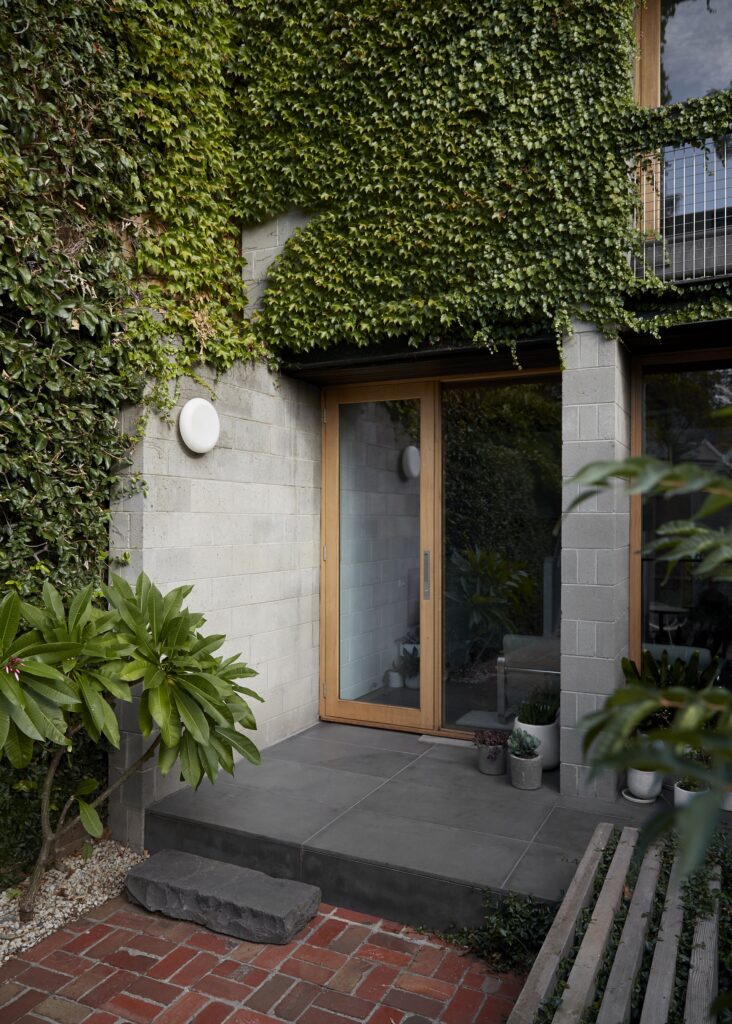
“There’s a lot you can do with those older homes to bring them up to spec from a sustainability perspective” Jamie says. “All the external walls are a double concrete block, we installed blow-in insulation into the cavity and we’re training deciduous vines to run across the concrete block because that provides a layer of shade when you need it through the warmer months, and it drops the leaves during the winter.”
The renovation is also a masterclass in utilising space and light.
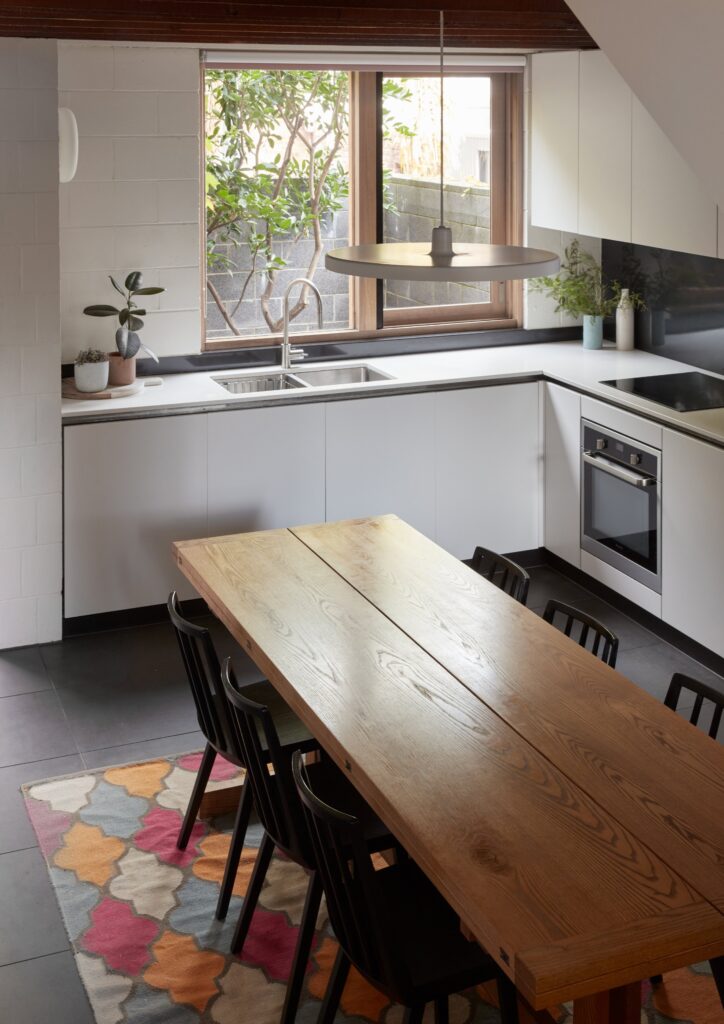
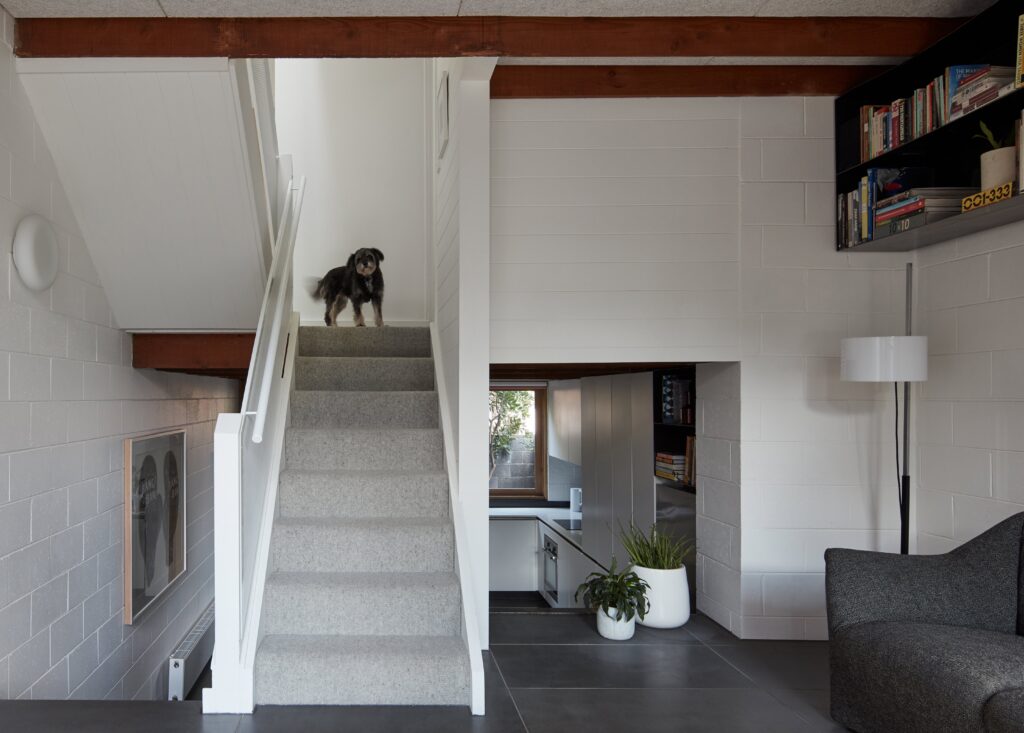
The living room, with its steel joinery up high and an acoustic ceiling between floors, is a fine example. Previously, there was a partition through the centre with the kitchen on one side and the dining room on the other. “Now being one space, it has more light and it’s nicer to occupy, but it’s also a much bigger, more functional kitchen.”
The home blends original 70s charm with contemporary elements which is very much by design, with every detail carefully considered to ensure a seamless transition from the original structure to the modern additions.
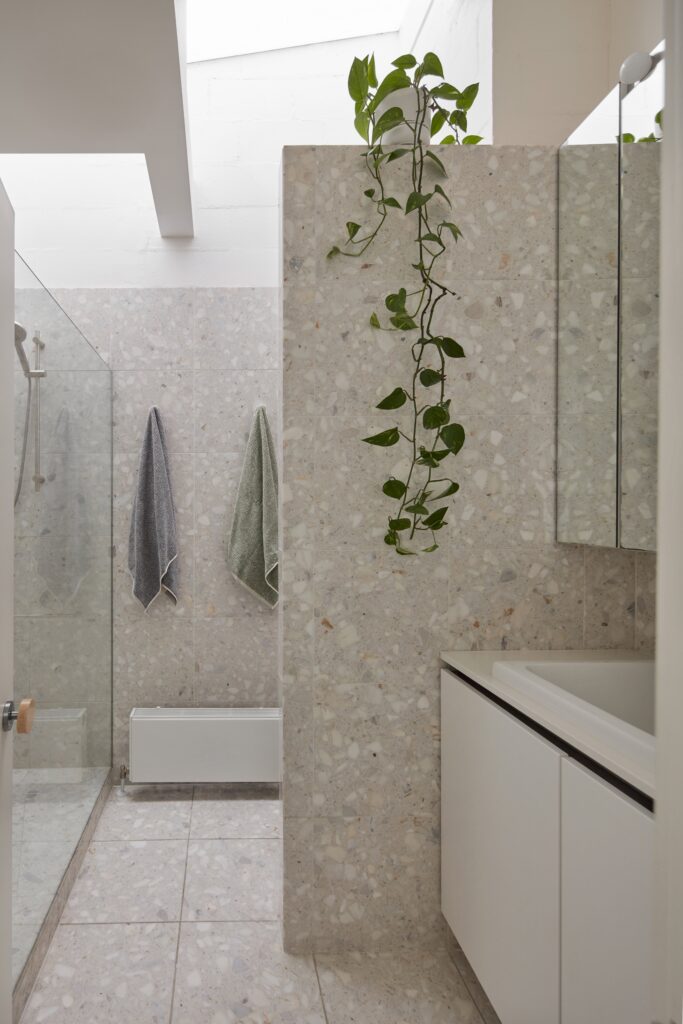
One striking feature of the Haines Street renovation is the blend of privacy and openness. The parent’s bedroom, in the top floor extension, basks in light from the south, while the adjoining bathroom, a few steps up due to the split levels, opens onto a sun-drenched rooftop deck, integrating the home with the outdoors.
This, Jamie says, is a beautiful, functional oasis that brings in natural light and connects the home to the outdoors.
The understated simplicity is achieved through the use of thermally modified timber cladding, which gives the space a minimalist look with clean lines while creating a calming, sanctuary that is blanketed by the stars while also remaining hidden from public view. “You’ll see that we’ve got a bath here on the roof, and the kids use this bath all the time” he says. “It’s also a very beautiful space for us.”
The project’s focus extends beyond architectural aesthetics to long-term environmental impact, with Jamie emphasising how sustainability is about more than just materials; it’s about the longevity and efficiency of the home. “The running costs of a home are the most critical over its lifecycle,” he says.
“The less fluctuation you have in heat and cool, that’s going to improve your comfort levels within the home – and it speaks to quality. “There’s very little drawback to that aspect of design.”
The Haines Street project goes beyond just sustainable innovation, combining sustainability, efficient use of space, and innovative design to transform an old home into a modern, environmentally conscious living space.
This renovation is not just about today. It’s about setting a standard for future inner-city living. “By mitigating our energy use through good design, and then putting in what is a modest solar array, those two things mean that we’re now in a very fuel efficient, energy efficient home.”
In the evolving urban landscape, projects like this are essential, paving the way for a new era of residential architecture and design that is in tune with the demands of tomorrow’s city living.
How do Aussies feel about energy-efficient features?
In partnership with the REA Group, we’ve launched the PropTrack Origin Australian Home Energy Report, analysing the motivations and challenges for Aussies to adopt energy-efficient initiatives at home. The report aims to help understand the sentiment of all Australians, whether they rent or own, towards energy efficiency.

This article was originally published as Australia is having an environmental awakening – and Earthship homes are taking off.
Whether you’re a buyer, renter or investor, you can find your place on realestate.com.au. As Australia’s No.1 property site, you’ll find the latest homes for sale, property news and real estate market data all in the one place.